Can You Live in a House While It’s Being Rewired?
Yes, you can sometimes live in a house while it’s being rewired, but it isn’t always practical or advisable. Whether you can remain at home depends on the size of your property, the extent of the electrical work, the condition of your existing wiring and how the project is organised.
A house rewire is one of the more disruptive home improvement projects. It can involve lifting floorboards, cutting channels into walls, replacing cables, installing new sockets and switches, and temporarily disconnecting electricity.
For homeowners in London and Kent, understanding what happens during a house rewire can help you decide whether to stay at home or arrange temporary accommodation.
In this guide, the experienced electricians at IELEC Electrical Contractors explain what to expect, how to prepare and when moving out might be the better option.
Can You Stay in Your House During a Rewire?
In some circumstances, it is possible to remain in your property while electrical rewiring takes place.
However, staying at home during a full house rewire is generally more challenging than remaining during a partial rewire.
A partial rewire might involve replacing wiring in one room or a particular section of the property. This can sometimes allow homeowners to continue using unaffected areas.
A full house rewire, on the other hand, involves replacing electrical wiring throughout the property. This may require access to almost every room, making everyday activities considerably more difficult.
Whether staying is feasible depends on several factors:
- Property size: Larger homes may offer more flexibility to work on different areas in stages.
- Extent of rewiring: A partial rewire is generally less disruptive than a complete electrical installation replacement.
- Electrical safety: Existing wiring and temporary electrical arrangements must be assessed by a qualified electrician.
- Access to essential facilities: Kitchens, bathrooms and bedrooms may become temporarily unavailable.
- Occupants: Families with young children, older residents, pets or people with additional needs may find the disruption particularly difficult.
Before deciding to remain in the property, discuss the proposed work schedule and safety arrangements with your electrical contractor.
How Disruptive Is Rewiring a House?
Rewiring a house can be highly disruptive, particularly in an occupied property.
Unlike replacing a light fitting or installing an additional socket, a full rewire often requires electricians to access wiring concealed behind walls, beneath floors and above ceilings.
1. Floorboards and Walls May Need Opening
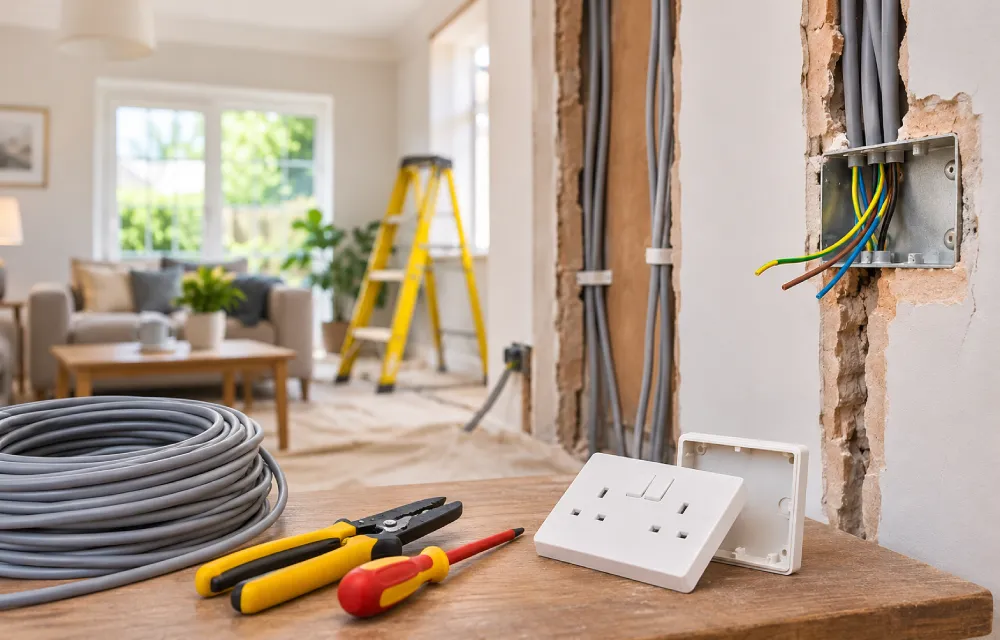
Electricians may need to lift floorboards or create channels in plaster to install new cables.
This can result in exposed surfaces, restricted access and areas that cannot be safely occupied while work is underway.
Although experienced electricians aim to minimise unnecessary damage, some disturbance is often unavoidable.
2. Electricity May Be Temporarily Disconnected
During rewiring, sections of the electrical installation must be safely isolated.
This means certain rooms may temporarily have no power for lighting, sockets or appliances.
There may also be periods when the electricity supply to the entire property needs to be disconnected.
Your electrician should explain the expected interruptions and whether any suitable temporary electrical arrangements are possible.
3. Dust and Noise Are Common
Cutting channels into walls, drilling and lifting flooring can generate significant dust and noise.
Furniture and belongings may need to be moved or protected before work begins.
For homeowners working remotely, caring for children or spending most of their day indoors, this disruption can make remaining in the property impractical.
4. Some Rooms May Be Temporarily Unusable
Depending on the work programme, you may temporarily lose access to bedrooms, living areas or the kitchen.
Even if electricity remains available elsewhere in the property, maintaining a normal household routine may be difficult.
Important: Areas containing exposed wiring, open floorboards or electrical work in progress should remain inaccessible to occupants unless the electrician confirms they are safe.
Is It Safe to Live in a House While It’s Being Rewired?
Living in a property during rewiring may be possible, but safety must always come first.
Electrical rewiring involves hazards that are not normally present in an occupied home, including exposed electrical components, disconnected circuits, tools, dust and temporary openings in floors or walls.
A competent electrical contractor should assess the risks and determine whether the work can be carried out safely while the property remains occupied.
Key considerations include:
- Ensuring electrical circuits are safely isolated before work begins.
- Preventing occupants from accessing hazardous working areas.
- Keeping escape routes and essential access clear.
- Managing dust, debris, tools and trailing cables.
- Ensuring any temporary electrical supplies are suitable and safe.
- Confirming that essential electrical services can be maintained or safely restored when required.
If safe access, essential facilities or adequate separation from the work cannot be maintained, temporary accommodation may be necessary.
At IELEC Electrical Contractors, our NICEIC-approved electrical contracting team prioritises safe working practices and compliance with the applicable requirements of BS 7671.
How Long Does It Take to Rewire a House While Living In It?
The time required to rewire a house depends on the property’s size, layout, accessibility and electrical requirements.
As a general guide, the following timescales may apply to a full rewire:
| Property type | Indicative duration |
| 1–2 bedroom property | 3–5 working days |
| 3 bedroom house | 5–7 working days |
| 4 bedroom house | 7–10 working days |
| Larger or complex properties | 10+ working days |
These are approximate examples rather than guaranteed completion times. They may not include extensive plaster repairs, redecorating or other making-good work.
Rewiring an occupied house can take longer than rewiring an empty property
Electricians may need to work around furniture, maintain access to essential rooms and complete the installation in stages.
Older properties can also present additional challenges, particularly where existing wiring is difficult to access or previous electrical alterations need investigating.
A professional electrical survey can help establish a more realistic project timescale.
Is It Better to Move Out During a House Rewire?
For many homeowners, temporarily moving out during a full house rewire is the more practical option.
An unoccupied property allows electricians to access rooms without needing to work around normal household activities.
It can also reduce the difficulties associated with power interruptions, noise, dust and restricted access.
Benefits of Moving Out Temporarily
- Electricians can access the property more freely.
- Work may be completed more efficiently.
- Occupants avoid exposure to construction dust and noise.
- There is less need to maintain usable living areas throughout the project.
- Safety arrangements can be easier to manage.
When Staying at Home Might Be Possible
Remaining at home may be feasible when:
- Only part of the property requires rewiring.
- The work can be safely divided into separate phases.
- Unaffected rooms remain accessible and usable.
- Suitable electrical supplies and essential facilities can be maintained.
- The electrical contractor confirms that occupancy is compatible with the planned work.
The decision should be based on a property-specific assessment rather than assuming that living through a rewire will always be safe or convenient.
How to Prepare Your Home for Rewiring While Living In It
If your electrical contractor confirms that remaining at home is feasible, preparation can help reduce disruption.
Discuss the Rewiring Schedule
Ask your electrician which rooms will be affected, when electricity will be unavailable and how long each stage is expected to take.
Understanding the work programme allows you to plan around temporary restrictions.
Clear Access to Electrical Points
Furniture, appliances and personal belongings may need to be moved away from sockets, switches and areas where cables will be installed.
Your contractor should explain which areas need to be cleared before work begins.
Protect Furniture and Belongings
Rewiring can produce considerable dust.
Protecting furniture, electronics and valuable belongings can help reduce cleaning requirements once the electrical work is complete.
Plan for Power Interruptions
Ask when power interruptions are expected and how essential needs will be managed.
If anyone in the household relies on electrically powered medical equipment, this must be discussed with the contractor before work starts, and appropriate alternative arrangements should be made.
Keep Children and Pets Away from Working Areas
Electrical installation work and associated building activities can present hazards.
Children and pets should be kept away from all designated working areas throughout the project.
What Happens After a House Has Been Rewired?
Once the electrical installation work is complete, the new or altered installation must undergo appropriate inspection and testing before being put into service.
For a full rewire, this would normally include an Electrical Installation Certificate (EIC) confirming the inspection and testing results for the completed work.
Where the work is notifiable under the applicable Building Regulations, the relevant notification and certification requirements must also be met.
Homeowners should also establish whether plaster repairs, flooring reinstatement or decorating are included in their electrician’s quotation.
Electrical completion does not necessarily mean that every room will immediately be fully redecorated or restored.
For more information about electrical inspections and certification, explore IELEC’s electrical testing and inspection services.
Why Choose IELEC for House Rewiring in London and Kent?
Rewiring a property requires careful planning, technical expertise and a thorough understanding of electrical safety requirements.
At IELEC Electrical Contractors, we provide professional electrical installation, maintenance and inspection services for residential, commercial and industrial properties across London, Kent and surrounding areas.
With over 20 years of electrical industry experience, our team understands the importance of completing electrical work safely while minimising unnecessary disruption.
When you choose IELEC, you benefit from:
- NICEIC-approved electrical contractors with extensive industry experience.
- Professional planning to help identify the most practical approach for your property.
- Safety-focused installations carried out in accordance with applicable electrical standards.
- Clear communication about the work involved and expected disruption.
- Electrical inspection and testing to verify the completed installation.
Whether you’re renovating an older house, purchasing a property or planning a complete electrical upgrade, our electricians can assess your requirements and explain the available options.
Planning a House Rewire in London or Kent?
Wondering whether you can stay in your home while it’s being rewired?
Every property is different, and the safest, most practical approach depends on the condition of the existing electrical installation and the scope of the proposed work.
At IELEC Electrical Contractors, we can assess your electrical requirements, explain the rewiring process and help you understand the disruption involved before work begins.
Whether you need a full house rewire, a partial electrical upgrade or professional advice about an older installation, our experienced electricians are here to help.
Contact IELEC Electrical Contractors today to discuss your house rewiring project in London or Kent.
Frequently Asked Questions About Living in a House During Rewiring
Yes, it may be possible to live in a house during rewiring if the work can be carried out safely and essential facilities remain available. However, a full house rewire can be extremely disruptive, and temporary accommodation may be advisable.
Not always. Moving out is not automatically required for every rewiring project. The decision depends on the extent of the work, the property’s condition and whether safe living arrangements can be maintained.
Yes, electricians can sometimes organise rewiring in stages, completing individual rooms or sections of the property. However, this depends on the existing electrical installation and whether circuits can be safely separated and tested.
A full house rewire can create significant dust, noise and disruption. Electricians may need to lift floorboards and cut channels into walls to install new cables. The amount of disturbance depends on the property’s construction and the installation method.
You may be able to sleep in your property during rewiring if a safe, unaffected sleeping area remains available and your electrician confirms that the arrangements are suitable. You should not occupy rooms containing hazardous or incomplete electrical work.